Discrimination sensor - List of Manufacturers, Suppliers, Companies and Products | IPROS

Discrimination sensor Product List

1~13 item / All 13 items

Displayed results

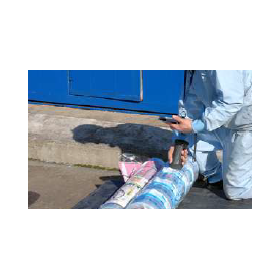
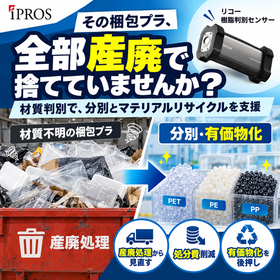
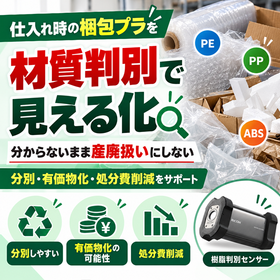
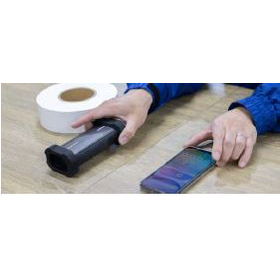
Identification of different packaging materials for each supplier <sent for incineration>

By gathering waste plastic materials, we can turn them into valuable resources and improve processing costs!

We would like to introduce the utilization proposal for the "Resin Identification Handy Sensor" that we handle. It is effective for issues such as "the types of packaging materials and wrapping materials differ by supplier, but since the materials cannot be identified, we incur disposal costs by sending them for incineration." Identifying the material takes only 2 seconds. By simply pointing the sensor, you can identify the material, allowing for the installation of sorting collection boxes and material checks during collection. [Overview] ■ Issue: The types of packaging materials and wrapping materials differ by supplier, but since the materials cannot be identified, we incur disposal costs by sending them for incineration. ■ Solution: By simply pointing the sensor, you can identify the material, enabling the installation of sorting collection boxes and material checks during collection. *For more details, please refer to the PDF document or feel free to contact us.

  • Other resource recycling
  • Other analytical equipment
  • Discrimination sensor

Added to bookmarks

Bookmarks list

Bookmark has been removed

Bookmarks list

You can't add any more bookmarks

By registering as a member, you can increase the number of bookmarks you can save and organize them with labels.

Free membership registration

[Case Study] Utilizing Sensors for Material Inspection! Val Corporation

Utilizing sensors for material inspection of a wide range of products to achieve shorter delivery times and cost reduction!

We would like to introduce a case where Ricoh's resin identification handheld sensor B150 was implemented at Bal Corporation, which supplies its own developed daily necessities and lifestyle goods to major 100 yen shops. The company began to be asked by its clients for evidence of material specifications, and the time and cost required for external inspections became a significant burden. By introducing this sensor, the company was able to accurately identify materials in-house, significantly reducing the costs and lead times associated with external inspections. 【Previous Challenges】 - The company needed to strengthen its internal checking system as clients began to request evidence of material specifications. - Particularly for repeat production items that required enhanced checks, the time and cost of sending items to external inspection agencies became a significant burden. - During the product development stage, it was necessary to use external inspection agencies to check the materials of sample products, which delayed the completion process. *For more details, please download the PDF or feel free to contact us.*

  • 【導入事例】材質検査にセンサーを活用!株式会社バル・コーポレーション様2.jpg
  • Other resource recycling
  • Other analytical equipment
  • Environmental Survey
  • Discrimination sensor

Added to bookmarks

Bookmarks list

Bookmark has been removed

Bookmarks list

You can't add any more bookmarks

By registering as a member, you can increase the number of bookmarks you can save and organize them with labels.

Free membership registration

[Case Study] Significant Improvement in Material Identification Accuracy! Meiwa Packs Co., Ltd.

Regardless of the location, anyone can easily and accurately identify plastic materials, improving the recycling collection rate to 90%!

We would like to introduce a case study of the introduction of sensors at Meiwa Pax Co., Ltd., a professional company in the field of flexible packaging using plastic films. At the company's main factory in Hyogo, the accuracy of material identification for the valuable trading and recycling rate improvement of multi-material waste films has been a challenge. After processing, the types of waste plastic films could not be identified, making it impossible to collect them separately. With the introduction of sensors, the recycling collection rate and valuable trading rate for polypropylene improved to 90%. [Previous Challenges] - After processing, the types of waste plastic films, such as those that have been laminated or printed, could not be identified, making it impossible to collect them separately for valuable trading or recycling. - The recycling collection rate and valuable trading rate for polypropylene remained at around 10%, necessitating reform. *For more details, please download the PDF or feel free to contact us.

  • Other resource recycling
  • Other analytical equipment
  • Environmental Survey
  • Discrimination sensor

Added to bookmarks

Bookmarks list

Bookmark has been removed

Bookmarks list

You can't add any more bookmarks

By registering as a member, you can increase the number of bookmarks you can save and organize them with labels.

Free membership registration

[Case Study] Utilizing Sensors for the Valorization of Waste Plastics! Fuji Kasei Co., Ltd.

We will introduce a case where the material identification cost was significantly reduced, allowing for the collection of small amounts of waste plastic!

We would like to introduce a case study of the introduction of the "Ricoh Resin Discrimination Handy Sensor" at Fuji Kasei Co., Ltd., which is engaged in the processing and sales of recycled plastics, the purchase of waste plastics, and the collection and transportation of industrial waste. The company faced high costs for material discrimination of waste plastics, making it difficult to collect small amounts of waste plastics due to profitability concerns. Additionally, it was necessary to burn small amounts of waste plastics for material discrimination, which could produce toxic gases, raising concerns about health risks for the discriminators. With the introduction of the sensor, high-precision discrimination has become possible with easy operation. The need to burn waste plastics for discrimination has also been eliminated, reducing health risks for the discriminators and achieving a reduction in industrial waste and resource recycling. 【Previous Challenges】 - High costs for material discrimination of waste plastics made it difficult to collect small amounts of waste plastics due to profitability concerns. - It was necessary to burn small amounts of waste plastics for material discrimination, but some could produce toxic gases, raising health concerns for the discriminators. - Recyclable waste plastics were also classified as industrial waste. *For more details, please download the PDF or feel free to contact us.*

  • 【導入事例】廃プラスチックの有価物化にセンサーを活用!株式会社富士化成様2.jpg
  • Other resource recycling
  • Other analytical equipment
  • Environmental Survey
  • Discrimination sensor

Added to bookmarks

Bookmarks list

Bookmark has been removed

Bookmarks list

You can't add any more bookmarks

By registering as a member, you can increase the number of bookmarks you can save and organize them with labels.

Free membership registration

[Case Study] For Recycling Product Plastics! M.M. Plastic Co., Ltd.

We will introduce a case where it became easier to identify mixed PVC, resulting in improved purity of PP and PE products!

We would like to introduce a case where sensors were implemented at M.M. Plastic Co., Ltd., which is engaged in the collection, sorting, and recycling of waste plastics such as container packaging plastics. The company started a business for the collection and reuse of product plastics, but there was no system in place to check the material of product plastics immediately after acceptance and after sorting by large sorting machines, raising concerns about quality assurance. With the introduction of sensors, it became easier to distinguish mixed PVC, and the purity of PP and PE products improved. They are now able to provide reliable products to customers. 【Previous Challenges】 ■ High chlorine concentration materials were mixed into recycled plastic pellets. ■ There was no system to check the material of product plastics immediately after acceptance and after sorting by large sorting machines, raising concerns about quality assurance. ■ There were concerns that the manual material identification skills could not be passed on due to the retirement of veteran staff. *For more details, please download the PDF or feel free to contact us.

  • 【導入事例】製品プラスチックのリサイクルに活躍!エム・エム・プラスチック株式会社様2.jpg
  • 【導入事例】製品プラスチックのリサイクルに活躍!エム・エム・プラスチック株式会社様3.jpg
  • Other resource recycling
  • Other analytical equipment
  • Environmental Survey
  • Discrimination sensor

Added to bookmarks

Bookmarks list

Bookmark has been removed

Bookmarks list

You can't add any more bookmarks

By registering as a member, you can increase the number of bookmarks you can save and organize them with labels.

Free membership registration

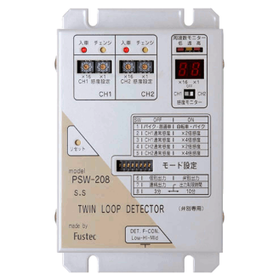
Direction Discrimination Unit HU-101

It determines the direction of passage for people and vehicles using a two-way function.

■Two-way function for direction detection Using two sensors to detect people and vehicles, the direction of passage is determined with a two-way function. ●Forward detection When people or vehicles are detected in the order of Sensor 1 → Sensor 2 within a certain time, a forward sound is emitted, and a forward output is generated for the timer duration. ●Reverse detection When people or vehicles are detected in the order of Sensor 2 → Sensor 1 within a certain time, a reverse sound is emitted, and a reverse output is generated for the timer duration. ■Detection of people and vehicles possible with AND detection of two sensors In addition to the conventional direction detection timer, the AND detection condition of Sensor 1 and Sensor 2 (detecting Sensor 2 while detecting Sensor 1) allows for the detection of vehicles (wide objects) only. *When set to conditions other than AND, the forward output operates with simultaneous input. ■Control of AC100V devices possible with large contact output In addition to small contacts, the forward output includes a large contact output (AC100V 5A resistive load), allowing direct operation of alarms such as rotating lights.

  • Security Sensor Systems
  • Discrimination sensor

Added to bookmarks

Bookmarks list

Bookmark has been removed

Bookmarks list

You can't add any more bookmarks

By registering as a member, you can increase the number of bookmarks you can save and organize them with labels.

Free membership registration

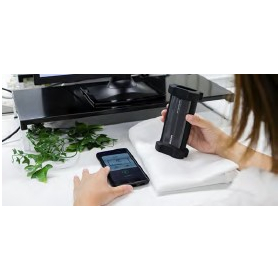
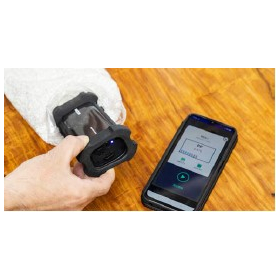
RICOH HANDY PLASTIC SENSOR B150

Even if you are operating for the first time, you can easily identify the resin! With various functions and settings, the sorting process is highly efficient.

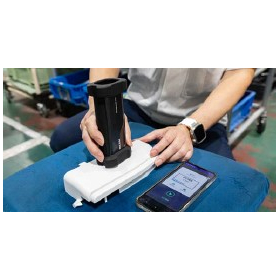
The "RICOH HANDY PLASTIC SENSOR B150" is a handheld resin identification sensor that allows for the speedy and easy differentiation of various types of plastics. It achieves a lightweight and compact size that can be handled with one hand. Since resin identification can be performed on-site, it contributes to an efficient workflow by eliminating the need to take samples back. Once the power is turned on, simply place the resin you want to identify against the measurement area and press the measurement button. We have pursued a simple operability so that many people can easily use it. 【Features】 ■ Compact and always portable ■ Simple operability that is easy for beginners and experts alike ■ Wireless connection with smartphones ■ Application that informs results via voice and screen ■ Selection of identification model data to improve resin identification efficiency *For more details, please refer to the PDF document or feel free to contact us.

  • Other resource recycling
  • Collection and transportation
  • Discrimination sensor

Added to bookmarks

Bookmarks list

Bookmark has been removed

Bookmarks list

You can't add any more bookmarks

By registering as a member, you can increase the number of bookmarks you can save and organize them with labels.

Free membership registration

[Case Study] Achieving Waste Plastic Separation at Construction Sites! Nishimatsu Construction Co., Ltd.

The introduction of the RICOH handheld sensor has made it possible to sort waste plastic at construction sites! We aim to improve the material recycling rate through diligent sorting activities.

We would like to introduce a case study of the introduction of the "Ricoh Resin Identification Handy Sensor" at Nishimatsu Construction Co., Ltd. Since the fiscal year 2015, the company has formulated a medium-term management plan related to environmental management, focusing on three pillars: "CO2 reduction in business activities," "biodiversity conservation," and "3R for construction waste." They have been actively promoting specific activities on-site. In 2016, they received certification as an "Eco-First Company" and have been exploring various initiatives as a leading company in environmental efforts within the construction industry. Here, we introduce their initiative for sorting waste plastics implemented at the Shiga Konan branch, which is a construction site. 【Previous Challenges】 ■ At construction sites, waste plastics were disposed of in a single container and collected for disposal without any efforts towards recycling. *For more details, please refer to the PDF document or feel free to contact us.

  • Other resource recycling
  • Other analytical equipment
  • Environmental Survey
  • Discrimination sensor

Added to bookmarks

Bookmarks list

Bookmark has been removed

Bookmarks list

You can't add any more bookmarks

By registering as a member, you can increase the number of bookmarks you can save and organize them with labels.

Free membership registration

[Case Study] Cost Reduction through the Valorization of Waste Plastics! Etria Co., Ltd.

We will introduce a case where it became possible to identify the material of waste plastics, leading to reduced processing costs and the creation of profits from the sale of valuable materials!

We would like to introduce a case study of the introduction of the "Ricoh Resin Identification Handheld Sensor" at Etria Co., Ltd., which develops and produces multifunction devices and printers. At the company's Gotemba facility, the monetization of waste plastics contained in the mixed waste discharged from the site was not progressing, making it difficult to promote efforts toward material recycling. With the introduction of the sensor, it became possible to identify the material of waste plastics, leading to significant cost reductions through reduced processing costs and profits from the sale of valuable materials. 【Previous Challenges】 - Unable to identify the materials of some waste plastics, resulting in waste disposal costs. - Difficulties in negotiating purchases with recycling companies due to a lack of specialized knowledge and technology for material identification. - The monetization of waste plastics was not progressing, making it difficult to promote efforts toward material recycling. *For more details, please download the PDF or feel free to contact us.

  • 【導入事例】廃プラスチックの有価物化でコスト削減!エトリア株式会社様2.jpg
  • 【導入事例】廃プラスチックの有価物化でコスト削減!エトリア株式会社様3.jpg
  • Other resource recycling
  • Other analytical equipment
  • Environmental Survey
  • Discrimination sensor

Added to bookmarks

Bookmarks list

Bookmark has been removed

Bookmarks list

You can't add any more bookmarks

By registering as a member, you can increase the number of bookmarks you can save and organize them with labels.

Free membership registration

[Case Study] Aiming for Zero Waste of Label Backing! Nichiei Shinka Co., Ltd.

We will introduce a case where it has become easy and efficient to identify the material of the collected "recycling-only backing paper"!

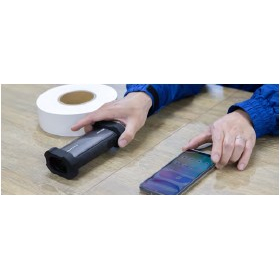
We would like to introduce a case where Nichiei Shinka Co., Ltd., which develops adhesive films and coating films, has implemented the "Ricoh Resin Identification Handy Sensor." The backing material for the company's main products, seal and label materials, is a composite of paper and resin, which has been discarded and incinerated in large quantities without being collected and reused as a resource. By introducing the sensor, it has become easy and efficient to identify the material of the collected "recycling-specific backing," playing an essential role in the establishment of the "Resource Circulation Project" scheme. 【Previous Challenges】 ■ The label backing has been discarded in large quantities without recycling, highlighting the need to establish a resource circulation system. ■ There was a need to accurately determine whether the collected "recycling-specific backing" is made of the unique material "Kamishine." *For more details, please download the PDF or feel free to contact us.

  • 【導入事例】ラベル台紙廃棄ゼロを目指す!日榮新化株式会社様3.jpg
  • Other resource recycling
  • Other analytical equipment
  • Environmental Survey
  • Discrimination sensor

Added to bookmarks

Bookmarks list

Bookmark has been removed

Bookmarks list

You can't add any more bookmarks

By registering as a member, you can increase the number of bookmarks you can save and organize them with labels.

Free membership registration

[Case Study] Visualizing the Value of Waste Plastics! LIXIL

We will introduce a case where efforts towards valuable transactions and waste reduction have rapidly accelerated!

We would like to introduce a case where the "Ricoh Resin Identification Handheld Sensor B150" was implemented at LIXIL Corporation, which handles a wide range of building materials, equipment, and various housing-related services. The company is promoting activities aimed at recycling and monetizing waste plastics at its Nabari factory, which is responsible for the production of entrance doors and interior building materials. However, a significant challenge was that most of the materials were unknown, making it impossible to sort them, and they had to be disposed of as mixed plastics. With the introduction of the sensor, it became possible to identify the types of plastics, and it was found that out of the 200 tons of waste plastics that were previously discarded each year, 50 tons had high potential for profitable resale. This has also contributed to a change in the recycling awareness of the manufacturing staff. 【Previous Challenges (Partial)】 - Some waste plastics with clear materials, such as PS and PP, could be recycled, but most were disposed of as mixed plastics due to unknown materials. - It was difficult to promote sorting within the process because the material and weight could not be visualized, leading to slow progress in primary sorting. *For more details, please download the PDF or feel free to contact us.*

  • Other resource recycling
  • Other analytical equipment
  • Environmental Survey
  • Discrimination sensor

Added to bookmarks

Bookmarks list

Bookmark has been removed

Bookmarks list

You can't add any more bookmarks

By registering as a member, you can increase the number of bookmarks you can save and organize them with labels.

Free membership registration

[Case Study] Utilized for the identification of waste plastics! Mazda

We will introduce a case that has gained a foothold in achieving material recycling through changes in materials!

We would like to introduce a case where Mazda Corporation, which is engaged in the manufacturing and sales of passenger cars, implemented the "Ricoh Resin Identification Handheld Sensor B150." The company was working on properly sorting and processing waste generated from the production process to enhance the value of waste plastics. However, even though they were manually sorting waste plastics associated with packaging materials for parts, the majority of the materials were unidentified, making accurate sorting difficult. With the introduction of this sensor, they were able to accurately identify over 80% of the materials, providing a foothold for achieving material recycling through material changes. 【Previous Challenges】 - They were manually sorting waste plastics associated with packaging materials, but the majority were unidentified, making accurate sorting difficult. - They were unable to visualize the types and quantities of materials being discharged. - They needed to take action in response to regulatory proposals requiring the use of recycled plastics for more than 25% of the plastics needed for new car production in Europe. *For more details, please download the PDF or feel free to contact us.*

  • Other resource recycling
  • Other analytical equipment
  • Environmental Survey
  • Discrimination sensor

Added to bookmarks

Bookmarks list

Bookmark has been removed

Bookmarks list

You can't add any more bookmarks

By registering as a member, you can increase the number of bookmarks you can save and organize them with labels.

Free membership registration

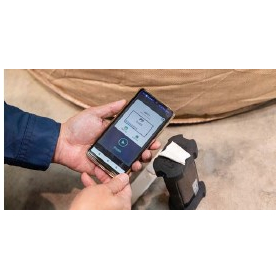
Material identification for purchasing waste plastic.

If purchasing decisions can be made on-site, it will reduce inspection costs and increase opportunities for resource acquisition!

We would like to introduce the utilization proposal for the "Resin Identification Handy Sensor" that we handle. It is effective for challenges such as "using external organizations due to lack of know-how in material identification" and "unable to increase personnel because technical skills are required." Since sales representatives can determine on-site whether purchases are possible, it reduces the costs and man-hours associated with returning for inspection. Additionally, it eliminates the need for skilled workers, allowing for an increase in personnel and ensuring that opportunities for resource acquisition are not missed. [Overview] ■ Challenge: Sales representatives cannot determine on-site whether purchases are possible. ■ Solution - Reduces costs and man-hours associated with returning for inspection. - Allows for an increase in personnel, ensuring that opportunities for resource acquisition are not missed. *For more details, please refer to the PDF document or feel free to contact us.

  • others
  • Discrimination sensor

Added to bookmarks

Bookmarks list

Bookmark has been removed

Bookmarks list

You can't add any more bookmarks

By registering as a member, you can increase the number of bookmarks you can save and organize them with labels.

Free membership registration